
Camera inspection: $300–$750
The first and non-negotiable step. Most operators credit it against the works if you proceed.
We camera the line first, show you what is actually wrong, and then tell you whether relining is the right answer. Often it is. Where the pipe has collapsed or lost its fall, it is not, and we will say so rather than sell you a liner that disappoints.
A resin-saturated liner is drawn into the existing pipe through an access point, inflated so it presses against the wall, and cured until it hardens. What you are left with is a continuous pipe inside the old one, with no joints along its length and a slightly smaller bore than the original.
Nothing is excavated, and the cured surface is smoother than the clay or concrete it lines, so flow is typically maintained or improved despite the small loss of diameter. On a property where a driveway, mature garden or paving sits over the line, that is the whole argument.
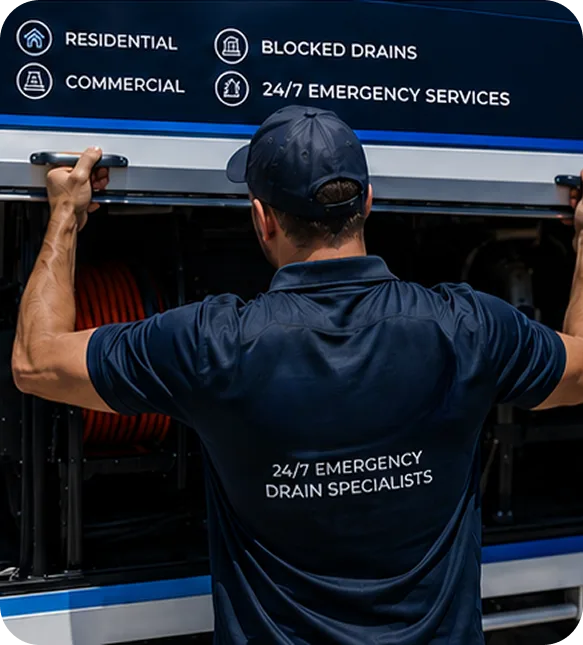

A crack that opens in summer and closes in winter produces a fault that comes and goes, which is maddening to diagnose and very easy to dismiss as bad luck.
The clay ground under St Andrews swells and shrinks through wet and dry spells, shifting and cracking underground pipework over time.
A liner is continuous through the affected length, so seasonal movement no longer has a joint to work on. On reactive ground that is the difference between a repair that lasts and one that reappears the next dry summer.
Heavy rain sends runoff surging through the stormwater pits along St Andrews’s curved streets, and they silt up, choke and back up.
Most people associate relining with sewers, but stormwater suffers the same failures and reline just as well: cracked lengths, open joints, roots, and sections that have silted because the fall has flattened. On a property that floods in every serious downpour, the line is often the reason rather than the rain.
The camera run matters more here than anywhere. Clearing a surcharging pit at the height of a storm tells you almost nothing; the same line inspected on a dry day tells you whether you have a blockage or a defect.
On a clay line the barrel is usually fine. What has gone is the mortar or rubber ring at each joint, and there is one every few hundred millimetres, which is a great many small openings after sixty or eighty years in the ground.
That matters for the quote. You are not replacing a pipe, you are sealing a long series of joints, and a liner does the whole run at once rather than patching them one at a time.
The established street trees and garden growth planted with the estate now send roots hunting into those ageing pipe joints, choking sewer lines from the inside.
Cutting roots out clears the pipe and does nothing about the way in. The joint they came through is still open, the tree is still looking for water, and the interval before the next blockage is set by how fast it grows back. That is why a jetted line often reblocks on a schedule you could almost diary.
A liner seals the full run, joints included, so there is no opening left to find. It is the one intervention that changes the pattern instead of resetting the clock.
On stable ground a short patch over a single defect is often the proportionate repair. On reactive soil it frequently is not, because the movement that opened one joint has been working on every other joint in the same run for the same number of years.
That is worth knowing when you compare quotes. The cheaper patch can be the right call, but on this ground the full-length liner is more often the one that ends the problem rather than relocating it a metre.
Once is weather. Twice is a defect, and the second event is the point at which paying for a camera saves money rather than costing it.
What we are looking for is specific: a belly holding water, a joint that has opened, a section crushed by a vehicle crossing. Each has a different answer, and only one of them is relining. Knowing which you have is worth more than another clear.
A relined sewer is a genuine asset at sale, and a documented one is worth more than an undocumented one. Keep the certificate, the invoice and both camera runs together with the property file.
If you are buying into an older property in St Andrews, a pre-purchase camera survey of the sewer is one of the cheapest pieces of due diligence available and one of the least often done.
The first and non-negotiable step. Most operators credit it against the works if you proceed.
Domestic sewer across Sydney in 2026. Longer single runs sit at the lower end of it.
Seals one defect. Right where the rest of the run is sound and the ground is stable.
Length, diameter and how many branches need reinstating are what move the number inside that band.
Excavation is only half the cost. Replacing the driveway or garden above it is the other half.
These are market ranges, not our price. Nothing is quoted before the survey, and nothing starts before you agree it. Figures here are indicative of the 2026 Sydney market rather than a quote from us, you get your own number as a fixed price before any work starts.

Nothing is priced until a camera has been down the line. The survey is recorded, distances are marked from a known point, and the footage is yours.
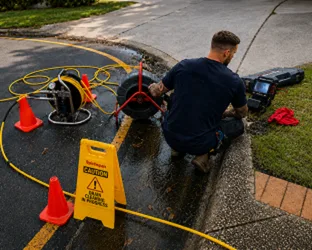
A single defect in a sound run wants a patch. A run failing along its length wants a full liner. A collapsed or sagging section wants excavation. The camera decides, not the quote.
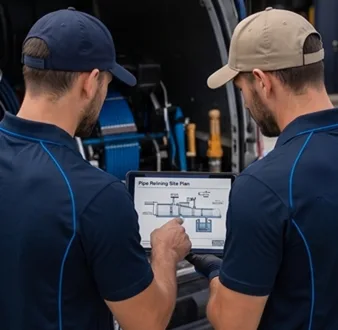
Jet clean, install through the existing opening, cure in place. Water is off for part of the day and nothing above the pipe is disturbed.

Junctions reinstated, final camera run, and the compliance paperwork where the work is notifiable. You keep both recordings.
Leave your details and a licensed plumber will call back to arrange the survey. No quote is given before someone has seen inside the pipe.
Cost, lifespan, method, and the cases where a liner is the wrong answer.

Ring us or leave your details. You will get a time for the inspection, not a price invented over the phone.

Leave your details and our local St Andrews team will call you back fast.