
Getting someone out: $80–$180
Standard Sydney call-out for after-hours attendance. Ask before booking, not after the invoice.
Genuine round-the-clock cover across St Andrews. You get an honest ETA rather than a flattering one, a fixed price before work starts, and on the calls that can safely wait, you get told that too.
Most of the value in an emergency call happens before anyone arrives. Knowing to shut the water off at the meter, knowing not to touch a light switch when there is a smell of gas, knowing to kill the power to a soaked area: each of those is worth more than the hour we save on the road.
So the call starts with instructions rather than a booking form. Then a crew is dispatched with the common failure points already on the van, because diagnosing from scratch at midnight is how a two-hour job becomes a two-visit one.


On a newer home this question is worth asking before anyone starts work, because the answer can be worth thousands. Defects in workmanship are typically covered for a period after completion; blockages from ordinary use are not.
St Andrews sits in Sydney’s Macarthur region (postcode 2566), a 1980s master-planned estate on the northern edge of Campbelltown, laid out in curved streets and cul-de-sacs of family homes near Raby, Bradbury and Minto. Now that the estate’s original pipework is maturing, its drains are starting to show their age, and we know the local ground well.
What settles it is evidence. We record what the camera shows and describe the fault in terms a builder or insurer can act on — a displaced joint, a fall out of tolerance, debris from construction. You may still choose to have us fix it tonight; the documentation is what lets you recover the cost afterwards.
It is not only drainage. Reactive soil moves water service lines too, and a pipe that has been flexed for years can let go without warning, usually at a fitting rather than mid-length.
For that one the first move is yours and it matters more than anything we do: find the water meter at the front boundary and turn the valve clockwise. The flooding stops while the van is still driving.
The clay ground under St Andrews swells and shrinks through wet and dry spells, shifting and cracking underground pipework over time.
Clay drainage is laid in short lengths, so a single run has a great many joints, and after decades each one has opened a fraction. The line copes fine at normal flow and stops coping the moment demand spikes, which is why so many of these calls come on a weekend morning or after a full house has been showering.
Clearing restores flow the same night. Whether it holds depends on what the camera finds, and that is worth doing before the next long weekend rather than after it.
Most homes around St Andrews have an overflow gully outside — a low grate, often near the back step, that nobody thinks about until it matters. It is deliberately set below the lowest fixture indoors so that when the line blocks, it spills into the garden instead of through your floor.
Heavy rain sends runoff surging through the stormwater pits along St Andrews’s curved streets, and they silt up, choke and back up.
So a gully running in heavy rain is not a fault. It is the system doing its job and telling you the line downstream of it has stopped taking water. That is the moment to call, not after it reaches the hallway.
It surprises people that a five-year-old house can have drainage trouble at all. But new lines fail for reasons old ones do not: bedding that was rushed, a fall that is slightly wrong, a section knocked out of line by machinery before the slab went down.
The upside is that new pipe is almost always repairable rather than replaceable, and the fault is usually one identifiable section rather than a tired system. The camera finds it quickly because there is nothing else wrong to distract from it.
Reactive clay soil shrinks through a dry spell and swells when the rain finally comes, and rigid drainage laid through it gets moved both ways. The joint that has been working loose all summer is the one that gives when the ground lifts.
It is the reason emergency drainage calls in these suburbs arrive in clusters rather than evenly, and why the week after a long dry breaks is consistently the busiest.
Standard Sydney call-out for after-hours attendance. Ask before booking, not after the invoice.
Roughly $120–$160 in daylight. Someone is out of bed and on the road, and the rate reflects it.
Where most single-fault after-hours jobs land once attendance, labour and small parts are counted.
Slab leaks, gas line work, anything that means opening a wall overnight. You approve the figure first.
We would rather book you for Monday at daylight rates than take a premium for a job that was never urgent.
These are market ranges, not our quote. You hear your number first and decide with it in front of you. Figures here are indicative of the 2026 Sydney market rather than a quote from us, you get your own number as a fixed price before any work starts.

Not a call centre. You describe what is happening, we tell you what to shut off right now, and whether this genuinely needs someone tonight. Sometimes it does not, and we say so.
The nearest available crew heads for St Andrews with the common failure points already stocked on the van: pipe, fittings, valves, drain gear.
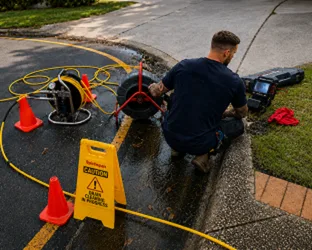
First job on site is stopping the damage: isolate, contain, make safe. Then you get a fixed price for the proper repair before it starts.

Most emergencies are permanently repaired on the spot. If a part has to wait for a supplier, you are left safe, watertight and functioning in the meantime.
Call and describe it. If it can hold, we will tell you, and book you at daytime rates. If it cannot, you will be glad you rang tonight.
Phone is quickest at night. The form works too and reaches the crew covering St Andrews rather than a national call centre.

Leave your details and our local St Andrews team will call you back fast.